

As an only child, I grew up in a small village called Livingston, just outside Edinburgh, with my mum and dad. It wasn’t a Christian home or with any Christian family members. Religion or God was never spoken about unless in the form of blasphemy. Family life was very complicated growing up. My dad was an alcoholic, so he wasn't really around much. I remember the many times he would come home drunk and start shouting abuse, setting fire alarms off early in the morning, windows being smashed and the police coming regularly to our door.


We recognise within TFT that there is a range of opinion on how people describe their sexual feelings and why. In the following three opinion pieces, David, Russ and Christine each explain the language that they prefer, along with their reasoning. At TFT, we don’t have an official “line” on the best vocabulary to use to describe a prevailing pattern of sexual feelings towards those of the same-sex. Whatever terms you choose to adopt, we would encourage you to respect that others will have settled on alternative preferred language for themselves, often for good reasons.
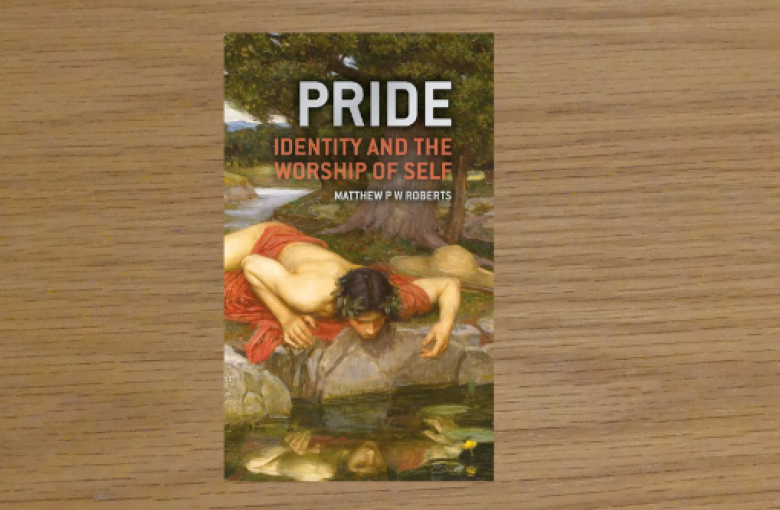
"Pride" is a book that was recommended by my Crosslands tutor for helping to clarify both the meaning of ‘concupiscence’ and the current issues surrounding it. I’m studying on their seminary programme, children’s and youth ministry track. When it came time to write my essay on ‘The Image of God’, I realised this book that was sitting on my shelf might be quite helpful! "Pride" is a book all about identity and how this gets distorted. It’s about worship and idolatry, and how we can end up worshipping ourselves (hence the name "Pride") instead of God.

I recently had to leave a local church because the new pastor and I disagreed about same-sex attraction (SSA). That church was no longer helping me grow in the likeness of Christ or allowing me to follow God’s call on my life for His kingdom. It was a prayer-filled, yet painful process to decide I could no longer be part of that church. So how did I get to that point and how did the pastor’s perspective impact my spiritual health during that time?
I was privileged enough to be born to Christian parents. They both are brilliant parents and brought me up in the faith. My father would read the Bible to me and my brothers every night, right until the end of primary school. I owe a large amount of my Bible knowledge to him and my mother. This knowledge has been really helpful as I have learned to deal with same-sex attractions (SSA), so I am incredibly thankful to my father for that.

As a child I was definitely not a girly girl. I was very much a tomboy, preferring my brothers Action Man over my Sindy doll, hating dresses and generally thinking life was so unfair that I was a girl. I first became aware of my same-sex attractions during puberty, when I was confused about my sexuality and identity. It was not a subject that I could talk about, as the other girls in my form were daydreaming over the new male boys PE teacher whilst I preferred the girls female PE teacher!
Happiness begins and ends in Jesus Christ. That’s it. Full stop. Surely it can’t be as simple as that? We all have friends and family who will encourage us to think something quite different. The argument is often that happiness can only truly be found in the arms of another person, in a sexual union of some sort. We hear voices saying that having Jesus is all well and good, but in this life, you can’t just rely on Him. You need something or someone else that is more tangible and immediate.

I shouldn’t feel like this. I’m a Christian.” “I feel so guilty.” “Do you think I am possessed?” Many times I have heard these, or similar statements, from those experiencing some form of mental or emotional distress or dis-ease. Sometimes this has been fuelled by a person’s engagement with scripture, the teaching they have received or the implicit ethos of the faith group they belong to.

I grew up in a Christian home. My Mum is a Spirit-filled, born-again believer of Christ, and brought up my sister and I to attend church and Sunday school. My Dad left my Mum under quite heart-breaking circumstances when I was just 2 and moved about 30 miles away. We usually saw him at the weekend. He and Mum had been elders at a local Church of England, but upon his sudden departure, Mum felt unable to return to church.