
My current job was my first secular job after university, and my first day began as most do - with an Human Resources (HR) induction. After explaining workplace policies and handing over my new work ID card, the friendly HR assistant gave me a lanyard to wear it on. It bore the logo of my new department, surrounded by a number of LGBTQ flags. I thanked her, took it, and followed her directions to my new office. In February that year I joined True Freedom Trust after struggling on and off with same-sex attraction for several years.


It should have been a really joyful conversation. My brother had phoned to say he’d met a woman who’d started going to his church, and after so many years of finding it hard to be single, he was now talking about marriage. But something in his voice was…off? There was a hesitation and strain I didn’t understand, and I couldn’t work out why he hadn’t mentioned any of this to me before now.

For the last 9 years I have had the privilege under God of pastoring our church family. Our church family comprises a large range of people- different nationalities, ages, social backgrounds and struggles. What unites us all is the desire to know Jesus better and serve him more faithfully. How do I enable our church family to do this? Most importantly it’s through my preaching and pastoring.

When people ask what my personal experience of pastoral care in the church has been like as a same-sex attracted Christian, I’m aware they might be expecting one of two things. On the one hand there is the horror story – the church that actively tells me I don’t need to live in accordance with what Christians have historically believed about sex and marriage, or maybe the church in which I’m made to feel shame for my experience of attraction.

We know from stories about King David’s life recorded for us in 1 and 2 Samuel that he had many painful experiences in his life – some arising from his own sin and some from other people’s sin. He was definitely not writing from an ivory tower immune from the trials of this living in a fallen world. Interestingly the verses in Psalm 23 where King David affirms his confidence that goodness and love would follow him all the days of his life come after the verses where he affirmed his confidence that God would be with him as he walked through the valley of the shadow of death.

We hope that you have enjoyed reading this edition of Ascend. We have prepared some questions to help you reflect on what you have read.
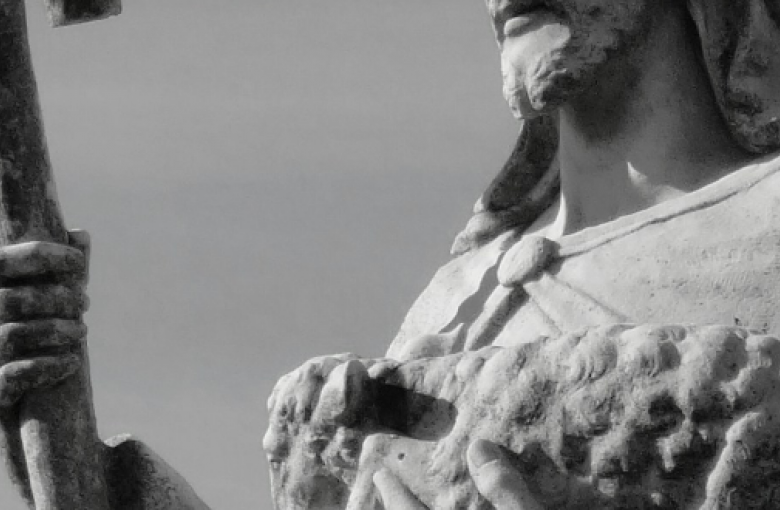
Even though I walk through the valley of the shadow of death, I will fear no evil, for you are with me; your rod and staff, they comfort me.’ (Psalm 23:4 NIV, 1984)

Right from the off I want to be clear that I am not the finished article – and thank God for that! However, over the years God has shown His grace in the most wonderful and powerful ways in my life. I am now in my sixties and have had a lifetime of being same-sex attracted. For over 40 of those years, I have been a follower of Jesus. Inevitably this has led to challenges and battles with temptation. The devil doesn’t give up trying to trip me up, but most importantly neither does God give up on me.
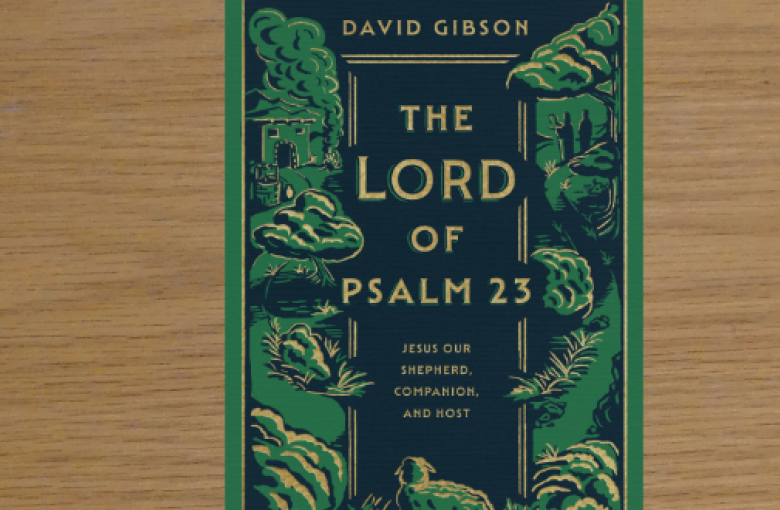
The LORD of Psalm 23 is a book which began as a three-part sermon series. David Gibson works through the psalm, dividing it into three natural sections, each with its own theme: 'The Sheep and the Shepherd', 'The Traveller and the Companion', and 'The Guest and the Host'. Each of the three parts of the book contains bible teaching and pastoral application - both comfort and challenge.